Wednesday, July 15, 2020

Clawson Quilting Sisters Losses

The Clawson Quilting Sisters have been meeting in the local park this last month. Before that we had Zoom meetings and before that no meetings since the lockdown in early March.

Over these months we have not lost anyone to COVID-19, but there have been losses.

Shirley Williams, a founding member of the group 20 years ago, died June 16 after a stroke. She was 94 years old.

And Lucy Lesperance had a stroke on April 1, which was discovered to be related to brain cancer. She passed away on July 9 at age 85.

Here are some photos of these women and their quilts.

Lucy's quilt Lucy in the Sky with Sapphires appeared in a number of local quilt shows and was juried into the American Quilt Society show at Paducah.

Lucy with her quilt
Lucy in the Sky with Sapphires
Every year Lucy made a quilt to be raffled off at her family Christmas gathering. They were always stunning.
Lucy organized the making of the teapot quilt for the Downtown Abbey Tea Party, which you can read about here.
Lucy at the Downton Abbey tea party with the raffle
quilt she organized

 
Lucy's Cardinal quilt won the CAMEO Guild challenge contest

Lucy in center front with a pie potholder


Shirley Williams was unable to continue her crafting at the level she once did but she found new ways to express her creativity by scanning photos on fabric and making mug rugs.

Shirley Williams and a mug rug, complete with tea bag pocket
In the photo below Shirley holds her quilt of miniature quilts which shows off her high skill level.

The photo above was taken at Shirley's 91st birthday party held by the quilters.
Shirley with blue icing!

Shirley in a vest she made
Shirley with one of her quilts
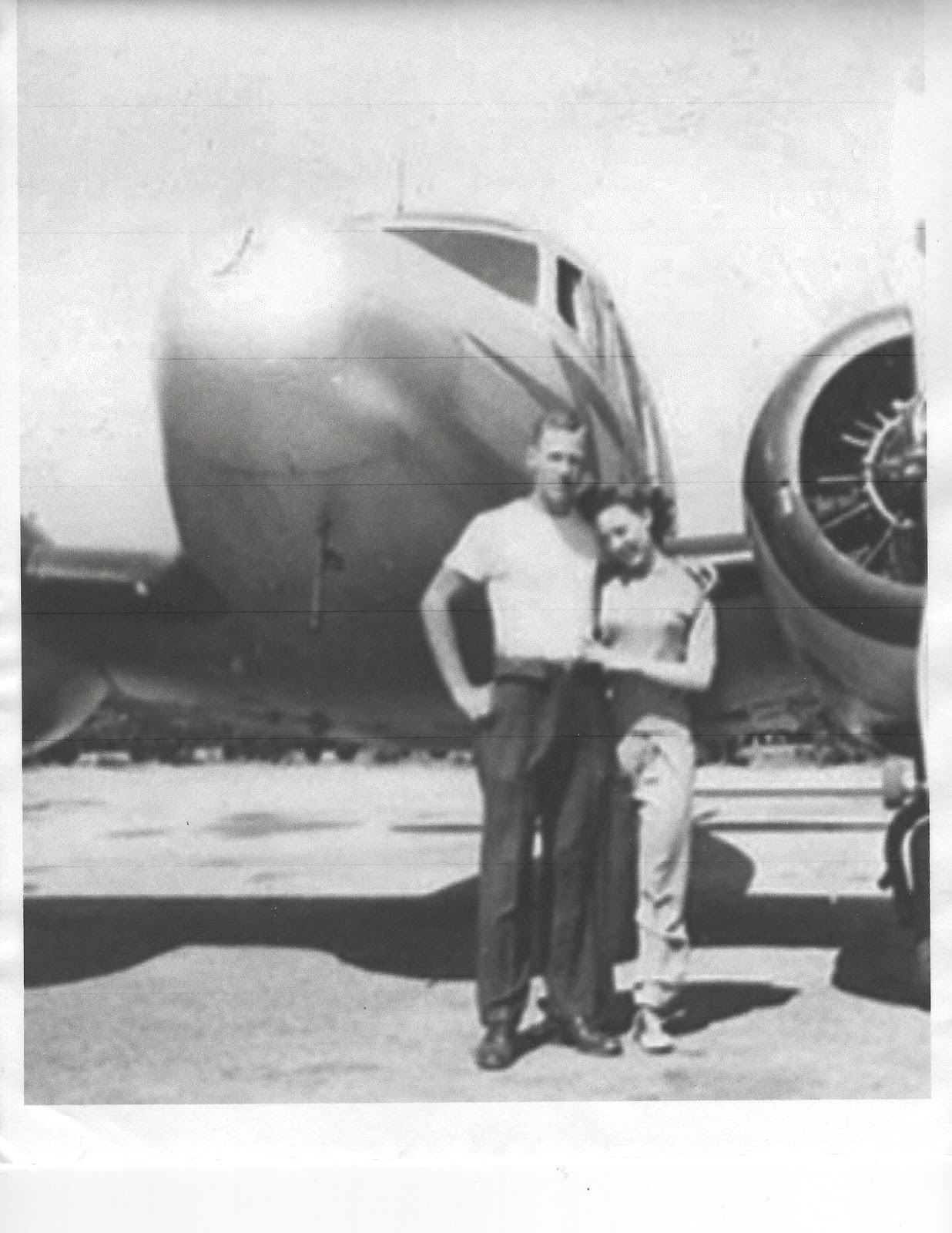
Shirley often told me the story of falling for a young WWII pilot. She took one look at him, removed her engagement ring, and announced that was the man she was going to marry!
A young Shirley with her husband
He taught her how to fly.
Shirley as a young woman
We don't know when the community center will reopen or when groups will be safe to meet indoors again. But when we do, things will not be the same.

Tuesday, July 14, 2020

Miracle Country by Kendra Atleework


The Eastern Sierra is a land of wild winds and wildfires. In 1892, Mary Austin arrived at the Eastern Sierra and wrote, "You will find it forsaken of most things but beauty and madness and death and God."

Once Paiute harvested fields of wild rye and love grass, before ranchers arrived to summer their stock. The cattle devoured the crops and the First People starved. Bill Mulholland stole lake water to grow Los Angeles. Drought depletes the wells while the streams are diverted to LA.

A woman from the Great Lakes and a man from the California coast were drawn to the sublimity of the high desert. They met in a band and went on a hike. They birthed two girls and adopted a brown-skinned son.

It's hard to know how to fix a smashed world at sixteen, at fourteen, at eleven.~ from Miracle Country by Kendra Atleework

Their idyllic life was smashed with their matriarch's early death, spiraling the children into their private hells from which their father could not save them.

Atleework left for LA and then the MidWest. The hills burned. The dust blew arsenic. Her father's well dried up. But the beauty of Atleework's homeland brought her back from her wanderings.

Whiskey's for drinking. Water's for fighting over.~from Miracle Country by Kendra Attleework

The environmental cost for the growth of cities is central to the story and raises ethical questions about water rights. "We live in a landscape damaged beyond repair," Atleework writes, "and we see our loss magnified the world over."

The story of water in Owens Valley...was a sad story of wrong done, a near tall tale with a suit-coated villian and cowboy herons. ~from Miracle Country by Kendra Atleework
The valley's discovery by American soldiers and the settlers eager to displace (or annihilate) the native people is the story of European attitudes that 'built' the country while also destroying it.

Atleework's Miracle Country was a pleasure to read, gorgeous in prose, intimate as a memoir, and wide-ranging in its portrait of a land and its people. Highly recommended.

I was given a free ebook by the publisher through NetGalley in exchange for a fair and unbiased review.

Miracle Country: A Memoir
by Kendra Atleework
Algonquin Books
Pub Date: July 14, 2020 
ISBN: 9781616209988
hardcover $27.95 (USD)

from the publisher:

Kendra Atleework grew up in Swall Meadows, in the Owens Valley of the Eastern Sierra Nevada, where annual rainfall averages five inches and in drought years measures closer to zero.
Kendra’s parents taught their children to thrive in this beautiful, if harsh, landscape, prone to wildfires, blizzards, and gale-force winds. Above all, they were raised on unconditional love and delight in the natural world. After Kendra’s mother died of a rare autoimmune disease when Kendra was just sixteen, however, her once beloved desert world came to feel empty and hostile, as climate change, drought, and wildfires intensified. The Atleework family fell apart, even as her father tried to keep them together. Kendra escaped to Los Angeles, and then Minneapolis, land of tall trees, full lakes, water everywhere you look. 
But after years of avoiding her troubled hometown, she realized that she needed to come to terms with its past and present and had to go back. Miracle Country is a moving and unforgettable memoir of flight and return, emptiness and bounty, the realities of a harsh and changing climate, and the true meaning of home.
 For readers of Cheryl Strayed, Terry Tempest Williams, and Rebecca Solnit, this is a breathtaking debut by a remarkable writer.  

Sunday, July 12, 2020

Underwater: How Our American Dream of Homeownership Became a Nightmare by Ryan Dezember


My brother tells the story of a friend and his wife who in the early 2000s built their dream house in an upscale part of Oakland County, Michigan. After a few years they decided to relocate. They owed more than the house's market value.

Is real estate still a good investment? Perhaps if you are in it for the long run.

My folks bought a modest house in 1972 for $33,900. Between 2004 to 2005 it's value shot up by 72%. By 2009 when I inherited the house it's value had plummeted by 50%.

We weren't selling. It was our retirement home. Today the value has risen again, neighboring houses selling in the range of their high back in 2005.

Perhaps the house's value will plummet again. Who knows what will happen in ten or twenty years? But if we had not inherited a home, we would be renting. That $1500 a month expense would have made us penny-pinchers in our golden years, just as we were when we were starting out. Living without mortgage or rent has made all the difference.

Ryan Dezember was a journalist covering real estate for an Alabama newspaper when he and his wife purchased a modest home in 2005. Within years the marriage was over, the house up for sale. The house would not sell for what he owed. The housing market had collapsed.

It took ten years before Dezember could unload the house. He figures it cost him $60,000. He understood the real estate business, the deals and flipping that made billionaires overnight--selling housing that didn't even exist yet. Still, he was a sucker for the American Dream of homeownership.

Underwater explains the whole messy, disgusting process that ruined the lives of so many. People like my brother's friends who ultimately told the bank, accept the buyer's offer or we are walking away and you'll get nothing. (The bank opted for nothing.)

After we inherited my folk's house, we spent our days off doing yard work and upgrading the electric and appliances. We walked the dog in our so-to-be-neighborhood, noting the foreclosure signs and sale signs. It was heartbreaking. These same houses are now so hot, realtors are clambering for houses to sell.

Dezember's book is full of real estate details of the transactions in the Alabama beach community he covered. It can be overwhelming! The book is humanized by his personal story. The environmental impact of building on the white sand shore of Alabama is distressing to read.

Dezember notes that 55% of owner-occupied home in the US are filled with people like me--seniors who will swamp the market in the 2030s as they downsize or die. That means our home will fetch far less than it does today.

Should we sell when the value is high and rent?

Since the stock market is also unreliable, selling and investing the money could also be risky.

Underwater explains the real estate game and how people like you and me find our investments gutted overnight. "Banks are amoral," Dezember reminds us. It's all about profit.

I was given a free ebook by the publisher through NetGalley. My review is fair and unbiased.

Underwater: How Our American Dream of Homeownership Became a Nightmare
by Ryan Dezember
St. Martin's Press
Thomas Dunne Books
Pub Date  July 14, 2020
ISBN: 9781250241801
hardcover $28.99 (USD)

from the publisher:
His assignment was to write about a real-estate frenzy lighting up the Redneck Riviera. So Ryan Dezember settled in and bought a home nearby himself. Then the market crashed, and he became one of the millions of Americans who suddenly owed more on their homes than they were worth. A flood of foreclosures made it impossible to sell. It didn't help that his quaint neighborhood fell into disrepair and drug-induced despair. He had no choice but to become a reluctant and wildly unprofitable landlord to move on. 
Meanwhile, his reporting showed how the speculative mania that caused the crash opened the U.S. housing market to a much larger breed of investors.
In this deeply personal story, Dezember shows how decisions on Wall Street and in Washington played out on his street in a corner of the Sunbelt that was convulsed by the foreclosure crisis. 
Readers will witness the housing market collapse from Dezember’s perch as a newspaper reporter. First he’s in the boom-to-bust South where a hot-air balloonist named Bob Shallow becomes one of the world’s top selling real-estate agents arranging condo flips, developers flop in spectacular fashion and the law catches up with a beach-town mayor on the take. Later he’s in New York, among financiers like Blackstone’s Stephen Schwarzman who are building rental empires out of foreclosures, staking claim to the bastion of middle-class wealth: the single-family home.
 Through it all, Dezember is an underwater homeowner caught up in the mess. 
A cautionary tale of Wall Street's push to turn homes into assets, Underwater is a powerful, incisive story that chronicles the crash and its aftermath from a fresh perspective—the forgotten, middle-class homeowner.

Saturday, July 11, 2020

This I Know by Eldonna Edwards


I don't think there's a bushel big enough to hide the Knowing. It keeps getting bigger and stronger, like a storm cloud before it grows into a tornado. I've spent most of my life holding it by the tail.~from This I Know by Eldonna Edwards
In 1969, eleven-year-old Grace is heir to special abilities that allows her to know things others cannot perceive.

She communes with her twin brother who died at birth, warns about impending crises, and healed a newborn sister's heart. It has been an unwanted gift passed down through her mother's family--until now. Grace stands up for the goodness of her insight.

Grace's mother is suffering postpartum depression, her eldest daughter taking on her tasks. Grace's father is a non-denominational church pastor with a nominal salary that requires his taking part-time jobs. He does not trust that Grace's gift is godly and commands her to turn from the Knowing.

Grace's life in Cherry Hill along Lake Michigan is filled with the beauty of nature and the suspicion of townsfolk. She befriends a drifter and is taken up by the daughter of hippies. On the verge of becoming a woman, Grace must make the decision to bend to her father's will or suffer rejection and isolation.

Grace's enchanting voice captures the innocence of childhood coming to an end.

I have not read many books with pastors and pastor's kids as main characters. Immersion baptism at the lake, communion and worship services are a part of Grace's life. Edwards, a PK herself, captures the experience.

I got a kick out of "Daddy's talking about idols and graven images, but all I hear is blah, blah, blah." Or about Vacation Bible School, "I think most of the parents send their kids to get rid of them for a while because they're bored and sick of each other."

Grace turns to her predeceased twin Isaac to help her understand the big questions, particularly the nature of God and the source of evil in the world. It is the perennial struggle for people of faith. If God is good, why is there evil and suffering in the world? If God is all powerful, why does he allow it?

Grace's friend Lola introduces alternative lifestyles, a freedom from social conventions. Grace is able to accept people for who they are, to see their goodness.

Edwards has given readers a sympathetic character in a vivid setting on a journey of self-realization, standing up to a narrow world view. 

I received a free book from the author through an American Historical Fiction Facebook Group giveaway. My review is fair and unbiased.

This I Know
by Eldonna Edwards
Kensington
$15.95 paperback
ISBN: 9781496712875

Thursday, July 9, 2020

Pride and Prejudice: Jane Austen Children's Stories Easy Classics


I love books that introduce children to the great classics. 

My own introduction to the classics was through the Classics Illustrated Comic Books. My large collection included favorites The Count of Monte Cristo, Les Miserables, Lord Jim, Ivanhoe, and Jane Eyre. By the time I was eleven I was tackling the novels themselves. When our son was growing up I found abridged paperbacks of the classics which inspired him to read his favorites which included H. G. Wells and Jack London.

What could be better than Jane Austen for young readers! 

Pride and Prejudice has been adapted as plays and for movies and television since at least 1890 according to Devoney Looser in The Making of Jane Austen. The bare bones of the plot sequence is so well known by nearly everyone. 

This Easy Classics book includes all the expected scenes. But this retelling also catches Austen's irony. 

Chapter 1 begins with, of course, Mrs. Bennet telling her husband about the rich man who has moved into the neighborhood a good news. Mr. Bennet is described as reading his newspaper and "growing tired of his wife's excitement." Proclaiming that their daughters may benefit because the single man "must want a wife" causes Mr. Bennett to exchange a smile with Lizzy. 

Pride and Prejudice is part of the Jane Austen Children's Stories  which includes Emma, Northanger Abbey, Mansfield Park, Sense and Sensibility, Persuasion, and Love and Friendship. The UK edition includes a free audio book download. The series is suitable for children through Middle School.

What a wonderful resource!

The book is fully illustrated.

I was given a free ebook by the publisher through NetGalley. My review is fair and unbiased.

Pride and Prejudice: Jane Austen Children's Stories
by Jane Austen,  adapted by Gemma Barder
Sweet Cherry Publishing
Pub Date July 9, 2020 
paperback £6.99 (GBP)
UK (plus audio) edition ISBN: 9781782266136
US (Americanized) edition ISBN: 9781782267553

Tuesday, July 7, 2020

American Follies by Norman Lock


Norman Lock's American Novels have historical settings and characters but they are more than 'historical fiction;' America's character and development is revealed in his books, shedding light on the issues that we still struggle with today, including the treatment of African Americans and women's continuing struggle for equality.

I have been lucky to have read a number of Lock's seven books in this series. His newest installment, American Follies, is startling and disorienting, the characters morphing into action heroes, reality twisting into a nightmare.

A pregnant Ellen Finley seeks employment as a typist for the infamous suffragettes Elizabeth Cady Stanton and Susan B. Anthony. Ellen tells them her husband has gone to California to start a newspaper, but noting their displeasure at her married state, Ellen weeps crocodile tears and admits she is unmarried. The women sweep Ellen into their household as their latest pet project.

Ellen meets Harriet, a diminutive woman from Barnum's circus. Harriet takes a shine to Ellen and introduces her to the other circus performers, contortionists and clowns and sideshow acts whose differences excluded them from society.

After the birth of Ellen's baby, her world becomes unrecognizable. Her child is discovered to be mulatto and the KKK steals the babe. The suffragettes and Ellen, aided by Barnum and the circus folk, set on a journey across the country to save the child.

Ellen's postpartum delirium reveals the sickness at the heart of America. The poor are the enemy, filling the asylums and workhouses. Walls are built to keep out the Mexicans. Women seeking self-determination are to be burnt as witches. And the child of miscenegration is to be sacrificed at the altar of White Supremacy.
History is one smashup piled on top of another, the shards glued together with irony.~ from American Follies by Norman Lock 
"I wrote of the nightmare that was, and is, America for the disenfranchised and powerless," Lock writes in the Afterward.

American Follies takes us into the madhouse that is America, tracing the serpentine and insidious illness of hate that has infected our 244-year history.

I received a free ebook from the publisher through Edelweiss. My review is fair and unbiased.

American Follies
Norman Lock
Bellevue Literary Press
Publication Date: July 7, 2020
Trade Paperback $16.99 USD, $22.99 CAD, £12.99 GBP, €17.99 EUR
ISBN: 9781942658481, 1942658486

Read Lock on his series here
Read my review of previous books in the series
 A Boy in his Winter here
The Wreckage of Eden here
The Feast Day of the Cannibals here

Sunday, July 5, 2020

The Party Upstairs by Lee Conell

Having some trauma was called being alive.~ from The Party Upstairs by Lee Conell

In one day, the lives of the residents of a New York City apartment building are forever changed.

Caroline lived in the penthouse and had fancy dolls and a beautiful view and a distant, unreliable, father.

The superintendent's daughter Ruby grew up in the basement apartment down the hall from the garbage and laundry and boiler rooms.

Caroline and Ruby played dolls and make-believe as kids. They both studied art in college and graduated during the recession in 2008.

Caroline is supported by her parents as she creates marble sporks.

Ruby must support herself and takes the only job available, working in a coffee shop, her childhood dream of creating dioramas on hold.

When Ruby's boyfriend decides she isn't ambitious enough, they part ways and Ruby has nowhere to go but home, knowing her dad Martin will fume over the waste of an expensive education.

I graduated in 1978 with an English major. Jobs were scarce and I had to work at a department store before 'stepping up' to customer service in insurance and then moving into sales. Our son graduated in 2008 with a creative writing major. It was two years before he got a job, $9/hr work from home in customer service. Ten years later, he is doing well as a data analyst. We do what we have to do.  Ruby's predicament resonated with me!

What would Martin's dream job be? He never had one. He had jobs for getting by.~ from The Party Upstairs by Lee Conell

Martin is hard working, stressed, and frankly, bitter. He uses meditation to tamp down the stress. But he is on-call 24-7, asked to do all the dirty jobs. Pull out hair clogs in the bathroom drain, killing the pigeons that nest on the window ledges, kicking the homeless out of the hallway. He hates what he does, but he does it to keep his home. It reminded my of my father-in-law; his dad died of TB when he was a boy and he could not afford college. He worked for the CCC to support his mom. He ended up in a job at Buick in Flint in scheduling. He hated his job. But he supported three boys through college.

Hard times--depression, recession, natural disaster, pandemic--hit most of us in ways that the wealthy don't experience.

People believe they are friendly and supportive with their gifts of  Starbucks and MetroCard gift cards, but who needs coffee house gift cards when you are living in a windowless basement apartment with a discarded 1980s couch with cows on it and your bed is a repurposed elevator box?

It reminded me of all the Christmas cookies we received over the years from parishioners. We needed cold, hard cash, not calories. We wanted parsonage upgrades so I could fit a turkey in the wall oven or a replacement for the kitchen floor that permanently stained when our son dropped a strawberry.

There is nothing worse than living in provided housing, dependent on your job performance and keeping people happy, knowing at any time you could be asked to leave. Knowing how it would disrupt your family's life if you fail.

The tenants pretend to be friends with the super and his family. Noblesse oblige is alive and well. The people upstairs realize their power.

And it is making Martin crazy.

Tensions mount between Martin and Ruby, each desperately seeking the other's approval. They both go a little crazy. Bad things happen.

In the end, Ruby and Martin discover that the worst that can happen can lead to a better life.

The Party Upstairs pries open the doors to reveal the class divide, how the poor hobble themselves to unfulfilled lives out of fear. It is the story of breaking free and allowing oneself to make life choices that may not align with predominate values.

I was given a free ebook by the publisher through Edelweiss. My review is fair and unbiased.

The Party Upstairs
by Lee Conell
Penguin Press
Publication Date: July 7, 2020
ISBN: 9781984880277, 1984880276
Hardcover $26.00 USD, $35.00 CAD

Thursday, July 2, 2020

Democracy, If We Can Keep It: The ACLU's 100-Year Fight for Rights in America


In 2016 my husband was one of a million people who donated to the American Civil Liberties Union (ACLU) as a reaction to the election of Donald J. Trump. He told me he didn't always agree with them, such as supporting hate groups rights to free speech, but he did believe in their mission of protecting civil liberties.

I had read about Ruth Ginsberg's work with the ACLU in Conversations with RBG. I wanted to know more about the history and legacy of the ACLU.

Democracy, If We Can Keep It  by Ellis Cose was often fascinating, especially when dealing with the landmark cases, but some places I speed read.

Throughout American history, the federal government has enacted laws that reflected popular anxiety but threatened civil rights. As this history shows, the limiting of civil liberties has not been relegated to one time or one side of the political spectrum. Democracy is an ongoing experiment.

The ACLU has continually developed and honed its mission in response to a changing world. Its history is a history of America and the continual fight for the freedom of speech and dissent.

I received a free ebook from the publisher through NetGalley in exchange for a fair and unbiased review.

Democracy, If We Can Keep It: The ACLU’s 100-Year Fight for Rights in America
by Ellis Cose
The New Press
Pub Date July 7,2020
ISBN: 9781620973837
hardcover $38.99 (CAD)

from the publisher
Published to coincide with the ACLU’s centennial, a major new book by the nationally celebrated journalist and bestselling author
For a century, the American Civil Liberties Union has fought to keep Americans in touch with the founding values of the Constitution. As its centennial approached, the organization invited Ellis Cose to become its first ever writer-in-residence, with complete editorial independence. 
The result is Cose’s groundbreaking Democracy, If We Can Keep It: The ACLU’s 100-Year Fight for Rights in America, the most authoritative account ever of America’s premier defender of civil liberties. A vivid work of history and journalism, Democracy, If We Can Keep It is not just the definitive story of the ACLU but also an essential account of America’s rediscovery of rights it had granted but long denied. Cose’s narrative begins with World War I and brings us to today, chronicling the ACLU’s role through the horrors of 9/11, the saga of Edward Snowden, and the phenomenon of Donald Trump.
A chronicle of America’s most difficult ethical quandaries from the Red Scare, the Scottsboro Boys’ trials, Japanese American internment, McCarthyism, and Vietnam, Democracy, If We Can Keep It weaves these accounts into a deeper story of American freedom—one that is profoundly relevant to our present moment.

Wednesday, July 1, 2020

The Mothers by Brit Bennett


This is a story of mothers.

There was the mother who would not protect her daughter and the mother who abandoned her daughter.

The daughters become mothers, one by mistake and the other through great endeavor.

And there are the other Mothers, the Greek Chorus women of Upper Room Church, the women who pray and get things done--and spread the rumors.

There is the First Lady, the pastor's wife, mother of Luke, the handsome and thoughtless boy who grows to be a handsome and unreliable man.

It is the story of two girls and one boy, the tangled web of their silence and secrets.

It is the story of gender and power, the double-edged sword of ending an unwanted pregnancy, the way we categorize people as good or bad when good people do bad things, too.

These deeply flawed characters are each in their way heartbreaking as they break each other's hearts.

The audiobook is excellent. I only wish I could have marked special sentences and passages!

I received a free audiobook from the publisher. My review is fair and unbiased.

The Mothers
by Brit Bennett (Goodreads Author), Adenrele Ojo (Narrator)
ISBN0735288267 (ISBN 13: 9780735288263)

Sunday, June 28, 2020

Ford Times, April 1978; Will the Kirtland's Warblers Return?

The April, 1978 issue of the Ford Times featured a cover by Charlie Harper, with more illustrations inside. The article asks, "Will the Kirtland's Warbler Return?" The Kirtland Warbler lives in one small area of the world, in Michigan's Jack Pine forest.

The Kirtland Warbler winters in the Bahamas and returns to Michigan, to a habitat of under 50 square miles. The birds nest in the sandy soil known as Grayling sand.

Author Jean Ducey notes that at the time of her writing, the entire world's population weighed 12 pounds, consisting of 200 breeding pairs.

The Jack Pine cones only open with fire. The article states that the U. S. Forest Service completed a 500-acre burn and rotates the cutting and planting of trees on a five-year cycle. 

Camp Grayling cut back on tank training, Mio and Grayling provided guides and daily tours to control visitors, and studies were being made to determine the if the use of pesticides, area resort development, and weather change were impacting the populaiton.

Today, with continual human intervention to protect their habitat, the warblers number around 2000.
The Kirtland's Warbler Audubon photo
This issue includes articles on olden times childhood pranks (like outhouse tipping), recipes for carp, and baseball's wonderful fans. 

The Car Buy's Digest highlighted the new Ford cars.


The Fairmont EPA fuel estimate was 33 mpg highway and 23 city. It had "space age technology" with "computer modeling."
My mother had a Fiesta. It got an amazing 46 mpg highway and 34 city. It was built in Germany.

The Mustang II came in the Cobra II, Mach I, and King Cobra models.MPG was 33 for higheay and 23 for city.

"A Thunderbird for a special occasion," created for the Thunderbird Diamond Jubilee, had many 'custom touches' and rated 22 mpg highway.
The Pinto was a small, thrifty car. 35 mpg highway and 25 city.

Also included are the LTD, LTD II, Granada, and station wagons.

I am surprised by the decent gas mileage of these cars! Compare them to the 2020 models here.

Saturday, June 27, 2020

Ford Times: Special Issue on Environment, July 1970


The July 1970 issue of the Ford Times cover art is by Charlie Harper for the article "The Bald Eagle: America's Vanishing Symbol."

"He's in trouble because a good idea backfired," wrote author Boyce Rensberger.
I remember summer of 1963 listening to the radio and hearing a man discuss the eagle as endangered. This article discusses food chains, which Harper illustrated below, and how DDT in the food chain affected wildlife.
"In the Great Lakes states, where DDT level are high, only four percent of the nesting pairs are still able to reproduce," the author warns.

Luckily, DDT was banned and today in Michigan eagles are frequently seen. Just this week my brother, camping in the Upper Peninsula, caught this eagle in the middle of the road!

A
n article noted that in 1913 Henry Ford supported the migratory bird act, along with Theodore Roosevelt, Gifford Pinchot, and Thomas Edison. 

Ford's River Rouge complex was featured in an article on Ford's "battle against air pollution." By the 1960s, smog was affecting Dearborn neighborhoods. Ford spent $66 million to clean the air, but technology was limited. "300 engineers work full-time on the challenge," Frank Grady wrote. Ford only spent $50 million to develop the Mustang. 
"Everybody Loves Smokey the Bear" informs that Smokey getting 5,000 letters a week from fans.
Some of the letters are included. One reads,  "I would like to baby sit for Smokey. I am nine years old and I am not afraid of bears. your friend, Rhonda G."

Some of us Boomers remember the early 1970s and The Population Bomb scare that humanity was reproducing to levels that would cause mass destruction. "We're Running Out of Elbow Room!" is filled with warnings. First, the author claims that crime increases with population density because of psychological stress. The article concludes without answers, but says that one planner suggests better city planning.
"The Silent '70 Ford" had a muffler "improved with the addition of an asbestos wrapper."
 I noted the use of a black model in the article.
"Ford's Campaign to Control Auto Emissions" begins, "it would take three 1970 Ford cars to emit as much hydro-carbons and carbon monoxide" as was released by one 1960 model. Non-lead gas was "on the way" and research into alternatives to the internal combustion engine was noted to have been going on since 1952.
"National Parks are for People" included photographs by Bill Schmidt.
Cars + Parks = Camping.

"Camping....Why Do It?" is a humorous look at camping. Jean Riss writes,
"Sanitary facilities" Criminy! The simple problem of constructing a latrine in the wilderness tells more in half an hour about a man--his patience and ingenuity, his grasp of engineering principles, psychology, esthetics and the prevailing winds--that you could hope to learn on a world cruise."
 The issue ends with a Torino ad.
Ford Motor Company began publishing The Ford Times in 1908. The last issue came out in 1993. I was given a collection of copies from the 1960s and 1970s.

Thursday, June 25, 2020

COVID-19 Life: TBR, Quilts, News

I finished my embroidered cat quilt by machine quilting it on my new Bernina 570 QE! I am working on some surprise projects next.

Meanwhile, I am waiting for batting to arrive so I can hand quilt my Great Gatsby quilt.


Almost all the fabrics have arrived for my Mountain Mist Water Lily quilt. I saw this image online and it's my color inspiration.

1930s Vintage Water Lily Antique Quilt

I have read 88 books this year!

New books on my TBR shelf include two Goodreads wins:

  • The Great Indoors: The Surprising Science of How Buildings Shape Our Behavior, Health, and Happiness by Emily Anthes
  • The Restaurant by Pamela M. Kelley, woman's fiction about sisters in Nantucket
And from NetGalley:
  • Once Upon a Time I Lived on Mars by Kate Greene about her experience in a Martian-like environment
  • Nick in which Michael Farris Smith imagines Nick Carraway's war experience before going to NY and meeting Gatsby
  • His Truth is Marching On by Jon Meacham about John Lewis
I had to share some great photos from family members.

Below is our grandpuppy Sunny in her backyard paradise. Melissa is using her furlough to spiff up the landscaping. 


Our niece's son's Bar Mitzvah was all virtual and shared online.
Our dear friend Shirley Williams passed away last week. Here she is as a young woman with her husband. She often told me about their meeting.

During WWII, Shirley was engaged when she went to a local dance and saw a dashing young pilot. She removed her engagement ring and announced, that is the man I am going to marry. He taught her how to fly and she also had a pilot's licence.
We will dearly miss Shirley.

The Clawson library staff is back from furlough and we are working on restarting the book club as a virtual meeting!

My brother is camping on Michigan's Keweenaw Peninsula on Lake Superior, on the Sunset side, and has been sharing awesome photos!


We went to the local garden center. Everyone was wearing masks, even outside. We bought some basil and pots to repot some indoor plants and some gifts.

Otherwise, we are walking in the neighborhood early in the day and staying home.

Stay safe!

Tuesday, June 23, 2020

The Splendid and the Vile by Eric Larson

I have enjoyed Erik Larson's books ever since reading The Devil in the White City. I previously read and reviewed Dead Wake and also have read Isaac's Storm. (I have In The Garden of Beasts on Kindle.)

The Splendid and the Vile: A Saga of Churchill, Family, and Defiance During the Blitz is his best book ever! And the timing is perfect. The world needs to be reminded of what true leadership is and the importance of cohesive single-minded resistance in facing catastrophe.

Larson presents the cold, hard numbers of losses but concentrates on the human side of Churchill's personal family and closest aides and the experience of the common people of England.

Citizens trudged through the rubble to work after sleepless nights in air raid shelters. They planted gardens and kept farm animals to grow their own food. The volunteered their service. They lost everything and carried on.

Churchill was idiosyncratic, the Nazis delighting in making fun of his penchant for pink silk underwear and habitual clenching of a cigar between his teeth. Arriving in Washington, D.C. and staying in the White House, the president opened the door to a naked Prime Minister who quipped, I have nothing to hide, and went on to converse clad in a towel.

Churchill was fearless, watching the Blitz from rooftops, touring the devastated cities in an open car, never concerned for his personal safety. His example and his words inspired the people to find courage.

Churchill showed compassion and sorrow, he truly felt for the people he represented.

Churchill knew that Britain could not win a war against Germany. He kept up morale while desperately working to secure the American assistance that would save his country.

Drawing from her diary, Larson includes the personal life and romantic interests of the prime minister's daughter Mary Churchill. And we read of the doomed marriage of Randolph Churchill, a gambling addict and womanizer, his wife Pamela falling for the American Averell Harriman who was negotiating the Lend-Lease program.

Readers also follow Nazi leaders, whose idiosyncrasies outpaced even Churchill's. Goring liked to dress in costumes and makeup and amassed a huge collection of stolen art. Hesse traveled with a collection of pills on his clandestine flight to Britain, hoping to forge a peace agreement.

The book is everything you have heard it is.

I received an ARC from the publisher through Goodreads. My review is fair and unbiased.

from the publisher
The Splendid and the Vile takes readers out of today’s political dysfunction and back to a time of true leadership, when–in the face of unrelenting horror–Churchill’s eloquence, strategic brilliance, and perseverance bound a country, and a family, together.
The Splendid and the Vile: A Saga of Churchill, Family, and Defiance During the Blitz
by Erik Larson
Crown
ISBN-10: 0385348711
ISBN-13: 978-0385348713